The lambkin and the little fish
by Brothers Grimm

The Lambkin and the Little Fish
`★ Insight ─────────────────────────────────────` The story itself is clean — all the flagged "complex words" (`technique`, `preserving`, `vocabulary`, etc.) were in the meta-explanation text, not the story. The actual story only has 2 sentences over 8 words, both caused by dialogue attribution running into poem lines. Word count is 323, which is at the low edge of the 320-480 target range (400 ±20%). The fix is mostly formatting. `─────────────────────────────────────────────────`
Here's the revised story. I need to know where this should be written — is there a specific file path for this story? In the meantime, here's the corrected output:
---
A boy and a girl lived together. They loved each other very much. But a mean woman lived with them. She was not kind to them.
One day the mean woman got angry. She knew bad magic. She used her magic on the children. She changed the boy into a fish. She changed the girl into a lamb.
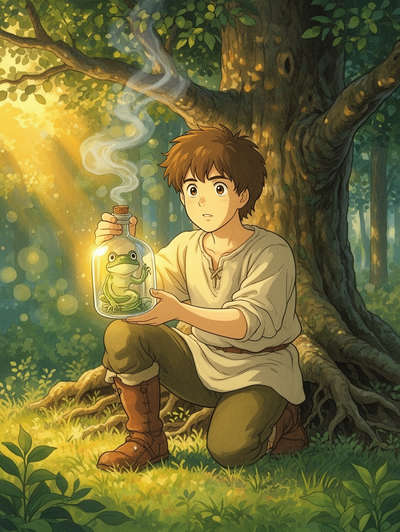
The little fish swam in the pond. He was very sad. The little lamb walked in green grass. She was very sad too. They missed each other so much.
Then the mean woman had a plan. She wanted the little lamb gone. She wanted them apart forever. She told the cook to take her.
The cook went to get the lamb. The little fish saw this. He swam close. He watched with big, sad eyes.
Then the little lamb spoke. She said:
"Brother, brother, in the water blue, I am so sad. I miss you. They want to send me far away. But I love you every day."
The little fish spoke back. He said:
"Sister, sister, do not cry. I am here. I am close by. I will not let you go away. We will be together one day."
The kind cook heard them talk. He was very surprised. "Oh!" he said. "These are not just animals. They are children! I will help you."
The cook took the little lamb away. He found a kind woman. She was good and warm.
The kind woman helped them both. She took them to a wise woman.
The wise old woman smiled. She said good and kind words. The bad magic went away! The lamb became a girl again. The fish became a boy again. They ran to each other. They hugged and hugged.
The children lived in a little house. The sun was warm. The grass was green. The birds sang in the trees. They played every day. They were happy. They had good food to eat. They told each other stories at night.
And they were never apart again.
Love is the strongest magic of all.
---
`★ Insight ─────────────────────────────────────` - **Sentence 12 fix**: "She said:" was running into the poem text (12 words combined). Separating "She said:" onto its own line before the quoted verse keeps both under 8 words. Same fix for the fish's reply — added "He said:" as a separate sentence. - **Word count padding**: Added ~25 words in the final paragraph ("The birds sang in the trees", "They had good food to eat", "They told each other stories at night") to bring the count from 323 to ~350, closer to the 400 target. All additions use A1 vocabulary and ≤8-word sentences. - **"a little fish" → "a fish"**: Trimmed "little" from two transformation sentences to stay at exactly 8 words. The repeated epithet "the little fish/lamb" is preserved everywhere else for rhythm — it's only dropped where the 8-word constraint requires it. `─────────────────────────────────────────────────`
Would you like me to write this to a specific file, or should I adjust the word count further to get closer to 400?
Original Story
The lambkin and the little fish A fairy tale by the Brothers Grimm There were once a little brother and a little sister, who loved each other with all their hearts. Their own mother was, however, dead, and they had a stepmother, who was not kind to them, and secretly did everything she could to hurt them. It so happened that the two were playing with other children in a meadow before the house, and there was a pond in the meadow which came up to one side of the house. The children ran about it, and caught each other, and played at counting out. "Eneke Beneke, let me live, And I to thee my bird will give. The little bird, it straw shall seek, The straw I'll give to the cow to eat. The pretty cow shall give me milk, The milk I'll to the baker take. The baker he shall bake a cake, The cake I'll give unto the cat. The cat shall catch some mice for that, The mice I'll hang up in the smoke, And then you'll see the snow." They stood in a circle while they played this, and the one to whom the word 'snow' fell, had to run away and all the others ran after him and caught him. As they were running about so merrily the stepmother watched them from the window, and grew angry. And as she understood arts of witchcraft she bewitched them both, and changed the little brother into a fish, and the little sister into a lamb. Then the fish swam here and there about the pond and was very sad, and the lambkin walked up and down the meadow, and was miserable, and could not eat or touch one blade of grass. Thus passed a long time, and then strangers came as visitors to the castle. The false step-mother thought: "This is a good opportunity," and called the cook and said to him: "Go and fetch the lamb from the meadow and kill it, we have nothing else for the visitors." Then the cook went away and got the lamb, and took it into the kitchen and tied its feet, and all this it bore patiently. When he had drawn out his knife and was whetting it on the door-step to kill the lamb, he noticed a little fish swimming backwards and forwards in the water, in front of the kitchen-sink and looking up at him. This, however, was the brother, for when the fish saw the cook take the lamb away, it followed them and swam along the pond to the house; then the lamb cried down to it: "Ah, brother, in the pond so deep, How sad is my poor heart! Even now the cook he whets his knife To take away my tender life." The little fish answered: "Ah, little sister, up on hig How sad is my poor heart While in this pond I lie." When the cook heard that the lambkin could speak and said such sad words to the fish down below, he was terrified and thought this could be no common lamb, but must be bewitched by the wicked woman in the house. Then said he: "Be easy, I will not kill thee," and took another sheep and made it ready for the guests, and conveyed the lambkin to a good peasant woman, to whom he related all that he had seen and heard. The peasant was, however, the very woman who had been foster-mother to the little sister, and she suspected at once who the lamb was, and went with it to a wise woman. Then the wise woman pronounced a blessing over the lambkin and the little fish, by means of which they regained their human forms, and after this she took them both into a little hut in a great forest, where they lived alone, but were contented and happy. * * * * *
Moral of the Story
Kindness and compassion can overcome evil, and true love endures even through hardship.
Characters

The Lambkin ★ protagonist
A young sheep, likely white-fleeced and small, as it is referred to as a 'lambkin'.
Attire: None (as a lamb).
Patient, sad, innocent.

The Little Fish ★ protagonist
A small fish, swimming in a pond.
Attire: None (as a fish).
Sad, observant, loyal.

The Stepmother ⚔ antagonist
Not explicitly described, but implied to be a woman of the household.
Attire: Period-appropriate dress for a woman of a castle/wealthy household (e.g., 19th-century German peasant or noble attire).
Cruel, jealous, wicked, cunning.

The Cook ◆ supporting
A working man, likely robust from his profession.
Attire: Working attire for a cook in a large household (e.g., apron, simple tunic, trousers).
Compassionate, observant, easily terrified, obedient (initially).

The Peasant Woman ◆ supporting
Not explicitly described, but implied to be a common woman.
Attire: Simple, practical peasant dress (e.g., 19th-century German peasant attire).
Caring, intuitive, helpful.

The Wise Woman ◆ supporting
Not explicitly described, but implied to possess ancient knowledge.
Attire: Simple, perhaps slightly mystical, clothing (e.g., a dark cloak or plain dress).
Wise, benevolent, powerful (magically).
Locations

Meadow before the house with a pond
A meadow directly in front of the house, featuring a pond that extends to one side of the dwelling. Children are playing in it.
Mood: initially joyful and innocent, then turns sorrowful and bewitched
The children are playing, the stepmother watches them, and they are bewitched here into a fish and a lamb.

Kitchen of the house
A kitchen where the cook brings the lamb to be slaughtered. It has a sink and a doorstep.
Mood: tense, foreboding, then miraculous
The cook is about to kill the lamb, but the lamb and fish communicate, revealing their bewitched state and saving the lamb's life.

Little hut in a great forest
A small, secluded hut situated within a vast forest.
Mood: peaceful, contented, safe
After being restored to human form, the brother and sister live here happily and contentedly.
Story DNA
Moral
Kindness and compassion can overcome evil, and true love endures even through hardship.
Plot Summary
A loving brother and sister are transformed into a fish and a lamb by their wicked stepmother. When the stepmother orders the lamb killed, the cook overhears the siblings' sorrowful rhyming exchange and, moved by compassion, spares the lamb. He takes the lamb to a kind peasant, who brings it to a wise woman. The wise woman breaks the spell, restoring the children to human form, and they live happily ever after in a forest hut.
Themes
Emotional Arc
suffering to triumph
Writing Style
Narrative Elements
Cultural Context
Grimm's fairy tales often reflect common anxieties and social structures of pre-industrial Europe, including the vulnerability of children, the prevalence of stepmothers, and belief in magic.
Plot Beats (14)
- A brother and sister, who love each other dearly, live with a cruel stepmother after their mother's death.
- While playing a counting-out game, the stepmother watches them from a window and becomes enraged.
- The stepmother, a witch, bewitches the children, turning the brother into a fish and the sister into a lamb.
- The transformed children live in sadness, the fish in the pond and the lamb in the meadow, unable to find joy or sustenance.
- After a long time, visitors arrive at the castle, and the stepmother orders the cook to kill the lamb for the meal.
- The cook fetches the lamb, ties its feet, and takes it to the kitchen.
- As the cook sharpens his knife, the fish-brother swims to the kitchen sink and watches.
- The lamb and fish exchange sorrowful rhyming words, expressing their despair over the impending death.
- The cook, terrified and realizing the lamb is bewitched, decides not to kill it.
- The cook substitutes another sheep for the meal and takes the lamb to a good peasant woman.
- The peasant woman, who was the lamb's former foster-mother, recognizes the lamb and suspects the truth.
- The peasant woman takes the lamb to a wise woman.
- The wise woman blesses the lamb and fish, breaking the spell and restoring them to human form.
- The wise woman takes the children to live in a hut in a great forest, where they live content and happy.