The ear of corn
by Brothers Grimm

The Corn and the Birds
Long, long ago, corn was very tall. It grew from the ground to the sky. Every stalk was big and full. A kind old man cared for the world. He made the corn grow. He made it yellow and beautiful. There was so much corn for everyone.
But the people were not thankful. They had so much food. But they did not care. They threw good food on the ground. They never said thank you for the corn.
One day, a woman walked by a field. The field was full of tall, golden corn. It was so beautiful.
The woman picked the beautiful ears of corn. But she did not eat them. She threw them on the dirty ground. She used the corn to clean her shoes. She did not care at all. The good corn was on the ground.
The kind old man saw this. He watched the woman waste the corn. He felt very, very sad. The corn was a gift for everyone. It was not right.
He spoke in a soft voice. "People do not love the corn," he said. "So the corn must go away." The tall corn got small. The big ears got little. Only tiny ears were left now.
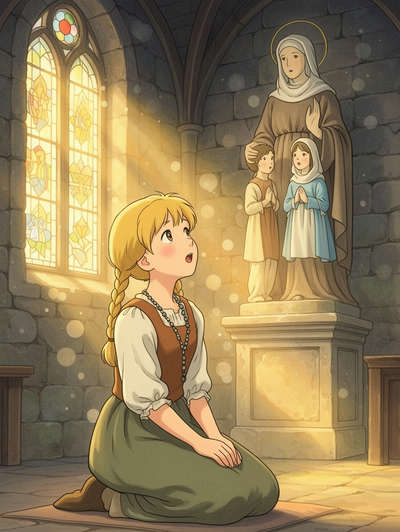
The people nearby felt very worried. They were very sorry. They ran to the kind old man. "Please!" they said. "Do not take the corn away! We are sorry. We will be good. Please help us!"
"But please, think of the birds!" they said. "The little birds need to eat too! They will be so hungry! They are so small. Please leave some corn for the birds."
The kind old man thought about the birds. He smiled a little smile. He loved the little birds. They were small and sweet. He wanted to help them.
"Yes," said the kind old man. "I will help the birds." He left corn at the top. The little birds came to eat. They were so happy! The people said, "Thank you! Thank you!" They were thankful every day.
And that is why corn is small today. The birds can always eat. When you see corn, say thank you too.
Original Story
The ear of corn A fairy tale by the Brothers Grimm In former times, when God himself still walked the earth, the fruitfulness of the soil was much greater than it is now; then the ears of corn did not bear fifty or sixty, but four or five hundred-fold. Then the corn grew from the bottom to the very top o f the stalk, and according to the length of the stalk was the length of the ear. Men however are so made, that when they are too well off they no longer value the blessings which come from God, but grow indifferent and careless. One day a woman was passing by a corn-field when her little child, who was running beside her, fell into a puddle, and dirtied her frock. On this the mother tore up a handful of the beautiful ears of corn, and cleaned the frock with them. When the Lord, who just then came by, saw that, he was angry, and said, "Henceforth shall the stalks of corn bear no more ears; men are no longer worthy of heavenly gifts." The by-standers who heard this, were terrified, and fell on their knees and praye d that he would still leave something on the stalks, even if the people were undeserving of it, for the sake of the innocent birds which would otherwise have to starve. The Lord, who foresaw their suffering, had pity on them, and granted the request. So the ears were left as they now grow. * * * * *
Moral of the Story
Ungratefulness and wastefulness can lead to the loss of blessings, but mercy can temper severe judgment.
Characters

God ⚔ antagonist
Not explicitly described, but implied to be in human form when walking the earth.
Attire: Not explicitly described, but would be simple and authoritative, fitting a divine being walking among people.
Just, wrathful, merciful

The Woman ⚔ antagonist
Not explicitly described, but a typical peasant woman of the era.
Attire: Simple, practical peasant dress, likely made of coarse linen or wool, appropriate for field work.
Careless, indifferent, thoughtless

The Little Child ○ minor
Small in stature, as children are.
Attire: A frock, which gets dirtied in a puddle, likely simple and practical for a child.
Innocent, playful (implied by falling in a puddle)

The By-standers ◆ supporting
Not explicitly described, but a group of ordinary people.
Attire: Simple peasant clothing, typical of the time and place.
Terrified, supplicating, compassionate (for the birds)
Locations

Corn-field (ancient times)
A field of exceptionally fruitful corn, where the stalks were long and bore four or five hundred-fold, with ears growing from bottom to top.
Mood: Abundant, prosperous, blessed, later tense and divine judgment
The woman cleans her child's frock with corn, leading to God's anger and the curse on the corn's fruitfulness.

Corn-field (after the curse)
The same corn-field, but now with stalks bearing only a small portion of ears at the very top, as they do in modern times.
Mood: Diminished, less abundant, a reminder of past transgression and divine mercy
The Lord grants the by-standers' plea, leaving some ears for the birds, establishing the corn's current form.
Story DNA
Moral
Ungratefulness and wastefulness can lead to the loss of blessings, but mercy can temper severe judgment.
Plot Summary
In ancient times, corn was incredibly abundant, but humans grew ungrateful. One day, a woman carelessly used a handful of corn to clean her child's dirty frock. God, witnessing this disrespect, became angry and decreed that corn stalks would no longer bear ears. Terrified bystanders pleaded for mercy, not for themselves, but for the innocent birds who would starve. God, showing pity, granted their request, leaving corn ears as they are known today, a reminder of both human failings and divine mercy.
Themes
Emotional Arc
abundance to loss to tempered restoration
Writing Style
Narrative Elements
Cultural Context
Reflects a pre-industrial agrarian society's understanding of crop yield and divine providence, possibly serving as a cautionary tale about resource management and spiritual humility.
Plot Beats (11)
- In former times, God walked the earth and corn was incredibly fruitful, growing from bottom to top of the stalk.
- Humans, being too well off, became indifferent and ungrateful for God's blessings.
- A woman, with her child, passes a corn-field.
- Her child falls into a puddle, dirtying her frock.
- The mother tears up a handful of corn ears to clean the frock.
- God, who is passing by, witnesses this act of wastefulness and disrespect.
- God becomes angry and declares that corn stalks will no longer bear ears, deeming humans unworthy.
- Bystanders, hearing God's decree, are terrified and fall to their knees.
- They pray to God to leave some corn for the sake of innocent birds, who would otherwise starve.
- God, foreseeing the birds' suffering, takes pity on them.
- God grants the request, allowing corn ears to remain as they are seen today.