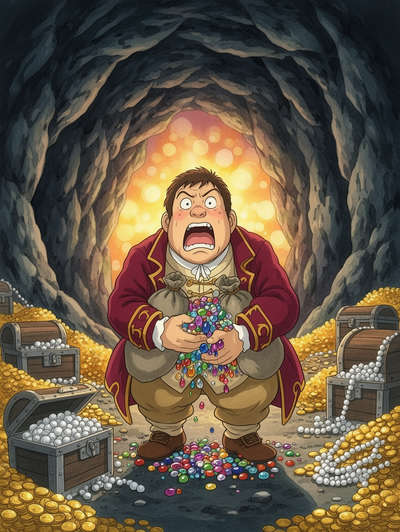
CLEVER HANS
by Brothers Grimm

Clever Hans
Hans was a silly boy. He lived with his Mama. Every day, he visited Grethel.
One day, Hans went to Grethel. "Hi, Grethel!" he said. "Hi, Hans!" said Grethel. "Here! Have this!" She gave him a needle. Hans was happy. He put the needle in a hay pile. But the needle got lost! "Oh, Hans!" said Mama. "Put it in your pocket!" Hans said, "OK, Mama!"
The next day, Hans went to Grethel. "Hi, Grethel!" he said. "Hi, Hans!" said Grethel. She gave him a big wooden spoon. Hans put the spoon in his pocket. But it was too big. Crack! The spoon broke. "Oh, Hans!" said Mama. She laughed. "Use your hands next time!" Hans said, "OK, Mama!"
The next day, Hans went to Grethel. "Hi, Grethel!" he said. She gave him a little cat. Hans held the cat in his hands. But the cat scratched him. "Ouch!" said Hans. The cat jumped away. "Oh, Hans!" said Mama. "Use a basket!" "OK, Mama!" said Hans. "I can do it!"
The next day, Hans went to Grethel. She gave him a cake. Hans put the cake in a basket. But he held the basket upside down. Crash! The cake fell out. It broke on the ground. "Oh, Hans!" Mama laughed. "Put it on your head! It will not fall." Hans said, "OK!"
The next day, Hans went to Grethel. She gave him a big pumpkin. Hans put it on his head. But he could not see! Bump! He walked into a tree. Bump! He walked into a fence. The pumpkin rolled away. "Oh, Hans!" said Mama. She laughed and laughed.
"Hans, you are so silly! Just smile and say thank you!"
So Hans went to see Grethel. He tried to smile. But he made a very silly face. He pulled his ears. He puffed his cheeks. He crossed his eyes. He looked so funny! Mama laughed. Grethel laughed. Hans laughed too.
Grethel smiled. "Oh, Hans! You are so funny!" Hans stopped and thought. He said, "Thank you, Grethel!" Grethel smiled a big smile. Mama smiled too. Hans felt happy. He did not need a pocket. Or a basket. Or his head. He just needed two small words. And from that day, Hans always said thank you.
Original Story
CLEVER HANS
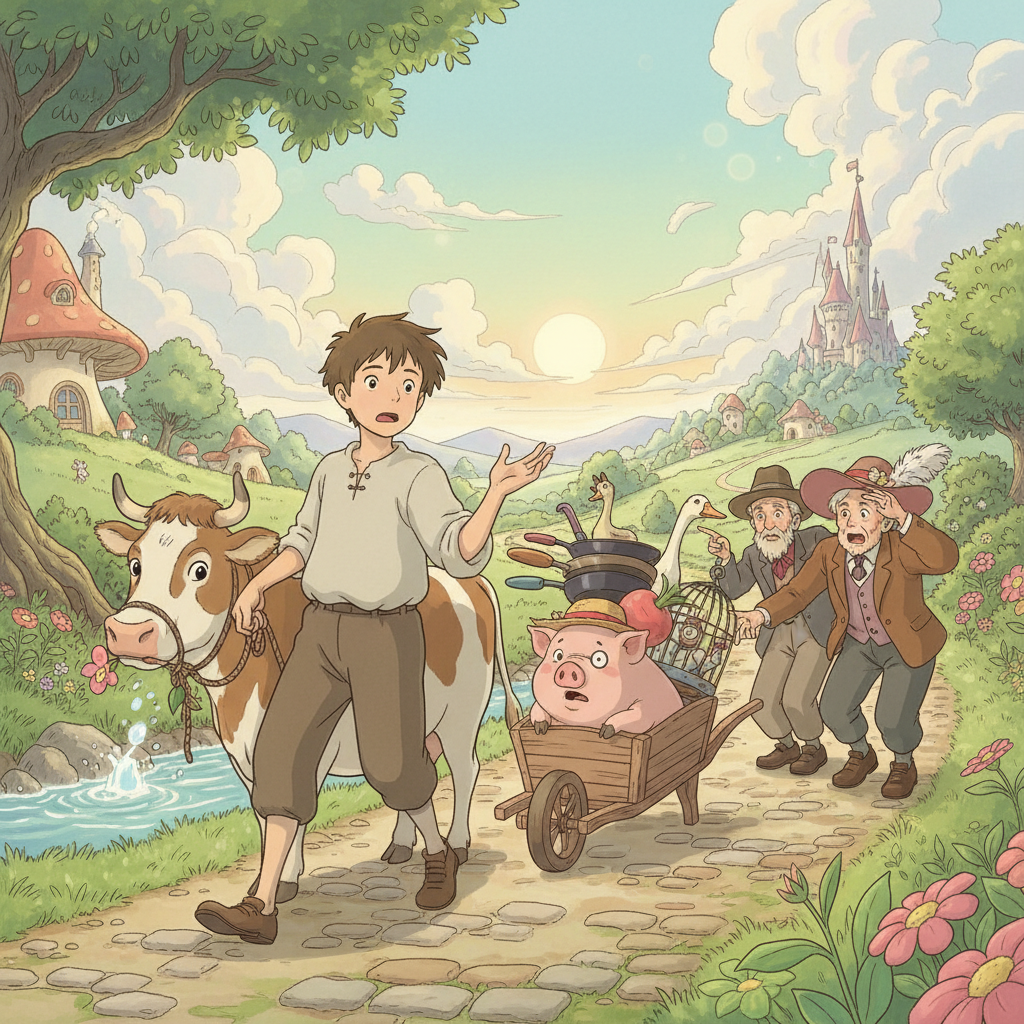
I
The mother of Hans said, “Whither away, Hans?”
Hans answered, “To Grethel.”
“Behave well, Hans.”
“Oh, I’ll behave well. Good-bye, Mother.”
“Good-bye, Hans.”
Hans comes to Grethel. “Good day, Grethel.”
“Good day, Hans. What do you bring that is good?”
“I bring nothing, I want to have something given me.”
Grethel presents Hans with a needle.
Hans says, “Good-bye, Grethel.”
“Good-bye, Hans.”
Hans takes the needle, sticks it into a hay-cart, and follows the cart home. “Good evening, Mother.”
“Good evening, Hans. Where have you been?”
“With Grethel.”
“What did you take her?”
“Took nothing; had something given me.”
“What did Grethel give you?”
286 “Gave me a needle.”
“Where is the needle, Hans?”
“Stuck in the hay-cart.”
“That was ill done, Hans. You should have stuck the needle in your sleeve.”
“Never mind, I’ll do better next time.”
II
“Whither away, Hans?”
“To Grethel, Mother.”
“Behave well, Hans.”
“Oh, I’ll behave well. Good-bye, Mother.”
“Good-bye, Hans.”
Hans comes to Grethel. “Good day, Grethel.”
“Good day, Hans. What do you bring that is good?”
“I bring nothing, I want to have something given me.”
Grethel presents Hans with a knife.
“Good-bye, Grethel.”
“Good-bye, Hans.”
Hans takes the knife, sticks it in his sleeve, and goes home.
“Good evening, Mother.”
“Good evening, Hans. Where have you been?”
“With Grethel.”
“What did you take her?”
“Took her nothing, she gave me something.”
“What did Grethel give you?”
“Gave me a knife.”
“Where is the knife, Hans?”
287 “Stuck it in my sleeve.”
“That’s ill done, Hans, you should have put the knife in your pocket.”
“Never mind, will do better next time.”
III
“Whither away, Hans?”
“To Grethel, Mother.”
“Behave well, Hans.”
“Oh, I’ll behave well. Good-bye, Mother.”
“Good-bye, Hans.”
Hans comes to Grethel. “Good day, Grethel.”
“Good day, Hans. What good thing do you bring?”
“I bring nothing. I want something given me.”
Grethel presents Hans with a young goat.
“Good-bye, Grethel.”
“Good-bye, Hans.”
Hans takes the goat, ties its legs, and puts it in his pocket. When he gets home it is suffocated.
“Good evening, Mother.”
“Good evening, Hans. Where have you been?”
“With Grethel.”
“What did you take her?”
“Took nothing, she gave me something.”
“What did Grethel give you?”
“She gave me a goat.”
“Where is the goat, Hans?”
“Put it in my pocket.”
288 “That was ill done, Hans, you should have put a rope round the goat’s neck.”
“Never mind, will do better next time.”
IV
“Whither away, Hans?”
“To Grethel, Mother.”
“Behave well, Hans.”
“Oh, I’ll behave well. Good-bye, Mother.”
“Good-bye, Hans.”
Hans comes to Grethel. “Good day, Grethel.”
“Good day, Hans. What good thing do you bring?”
“I bring nothing, I want something given me.”
Grethel presents Hans with a piece of bacon.
“Good-bye, Grethel.”
“Good-bye, Hans.”
Hans takes the bacon, ties it to a rope, and drags it away behind him. The dogs come and devour the bacon. When he gets home, he has the rope in his hand, and there is no longer anything hanging to it.
“Good evening, Mother.”
“Good evening, Hans. Where have you been?”
“With Grethel.”
“What did you take her?”
“I took her nothing, she gave me something.”
“What did Grethel give you?”
“Gave me a bit of bacon.”
“Where is the bacon, Hans?”
“I tied it to a rope, brought it home, dogs took it.”
289 “That was ill done, Hans, you should have carried the bacon on your head.”
“Never mind, will do better next time.”
V
“Whither away, Hans?”
“To Grethel, Mother.”
“Behave well, Hans.”
“I’ll behave well. Good-bye, Mother.”
“Good-bye, Hans.”
Hans comes to Grethel. “Good day, Grethel.”
“Good day, Hans. What good thing do you bring?”
“I bring nothing, but would have something given me.”
Grethel presents Hans with a calf.
“Good-bye, Grethel.”
“Good-bye, Hans.”
Hans takes the calf, puts it on his head, and the calf kicks his face.
“Good evening, Mother.”
“Good evening, Hans. Where have you been?”
“With Grethel.”
“What did you take her?”
“I took nothing, but had something given me.”
“What did Grethel give you?”
“A calf.”
“Where have you the calf, Hans?”
“I set it on my head and it kicked my face.”
“That was ill done, Hans, you should have led the calf, and put it in the stall.”
“Never mind, will do better next time.”
VI
“Whither away, Hans?”
“To Grethel, Mother.”
“Behave well, Hans.”
“I’ll behave well. Good-bye, Mother.”
“Good-bye, Hans.”
Hans comes to Grethel. “Good day, Grethel.”
“Good day, Hans. What good thing do you bring?”
“I bring nothing, but would have something given me.”
Grethel says to Hans, “I will go with you.”
Hans takes Grethel, ties her to a rope, leads her to the rack, and binds her fast. Then Hans goes to his mother.
“Good evening, Mother.”
“Good evening, Hans. Where have you been?”
“With Grethel.”
“What did you take her?”
“I took her nothing.”
“What did Grethel give you?”
“She gave me nothing, she came with me.”
“Where have you left Grethel?”
“I led her by the rope, tied her to the rack, and scattered some grass for her.”
“That was ill done, Hans, you should have cast friendly eyes on her.”
“Never mind, will do better.”
Hans went into the stable, cut out all the calves’ and sheep’s eyes, and threw them in Grethel’s face. Then Grethel became angry, tore herself lose and ran away, and became the Bride of Hans.
<center>* * *</center>
Characters

Clever Hans ★ protagonist
Not explicitly described, but implied to be a strong, able-bodied young man.
Attire: Simple peasant clothing: tunic, breeches, perhaps a cap. Likely made of rough, homespun fabric.
Gullible, literal-minded, obedient (to a fault)

Mother ◆ supporting
Not described, but implied to be a practical, if somewhat misguided, woman.
Attire: Typical peasant woman's clothing: long skirt, blouse, apron. Likely made of practical, durable fabric.
Well-intentioned, critical, unintentionally foolish

Grethel ◆ supporting
Not explicitly described, but implied to be a generous young woman.
Attire: Typical peasant woman's clothing: long skirt, blouse, apron. Perhaps slightly nicer than Hans's mother's clothing.
Generous, patient, eventually assertive
Locations

Mother's Cottage
A simple dwelling, presumably with a door or entryway where Hans greets his mother each evening.
Mood: homely, a place of instruction (however misguided)
Hans returns each evening to report his mishaps and receive his mother's (poor) advice.

Grethel's Place
Likely a house or farm, a place where Grethel has items to give away.
Mood: generous, a source of gifts
Hans visits Grethel repeatedly to receive gifts, setting up the escalating series of mishaps.

Hay-cart Route
The road or path between Grethel's place and Hans's home, where a hay-cart travels.
Mood: ordinary, a place of learning (the wrong lessons)
Hans first errs by sticking the needle into the hay-cart, beginning his series of mistakes.

Stable with Rack
A stable with a rack for tying animals, accessible from the outside.
Mood: chaotic, violent
Hans ties Grethel to the rack, then cuts out the eyes of the animals and throws them at her, leading to her escape and marriage.
Story DNA
Plot Summary
Clever Hans repeatedly visits Grethel, who gives him various gifts. Each time, he carries the gift incorrectly, leading his mother to give him specific advice on how to transport it. Hans, however, interprets his mother's advice in an extremely literal and foolish way, leading to the destruction or loss of the next gift. This pattern escalates until Hans, advised to 'cast friendly eyes' on Grethel, throws animal eyes in her face, causing her to flee, yet she inexplicably becomes his bride.
Themes
Emotional Arc
amusement to bewilderment
Writing Style
Narrative Elements
Cultural Context
This story reflects a common folk tale trope of the 'fool' or 'simpleton' whose literal interpretations of advice lead to absurd and humorous situations, often with a surprising or nonsensical resolution.
Plot Beats (9)
- Hans visits Grethel, who gives him a needle. He sticks it in a hay-cart, and his mother advises him to put it in his sleeve.
- Hans visits Grethel again, who gives him a knife. He sticks it in his sleeve, and his mother advises him to put it in his pocket.
- Hans visits Grethel, who gives him a goat. He puts it in his pocket, suffocating it, and his mother advises him to lead it by a rope.
- Hans visits Grethel, who gives him bacon. He drags it by a rope, losing it to dogs, and his mother advises him to carry it on his head.
- Hans visits Grethel, who gives him a calf. He puts it on his head, getting kicked, and his mother advises him to lead it to the stall.
- Hans visits Grethel, who decides to come home with him. He ties her to a rope, leads her to the rack, and scatters grass for her.
- Hans's mother advises him that he should have 'cast friendly eyes' on Grethel.
- Hans, misunderstanding, goes to the stable, cuts out the eyes of calves and sheep, and throws them in Grethel's face.
- Grethel becomes angry, tears herself loose, runs away, and then, inexplicably, becomes Hans's bride.